All India Seminar on Innovations in Science, Technology & Management (ISTM-2026)
About the Seminar:
The Seminar ISTM – 2026 aims to find a bridge between the mother Science, Technology and the Environmental issues and to implement these, the support and role of Management is also indispensable. The seminar is expected to offer the precious platform to interact address the issue for the future generation.
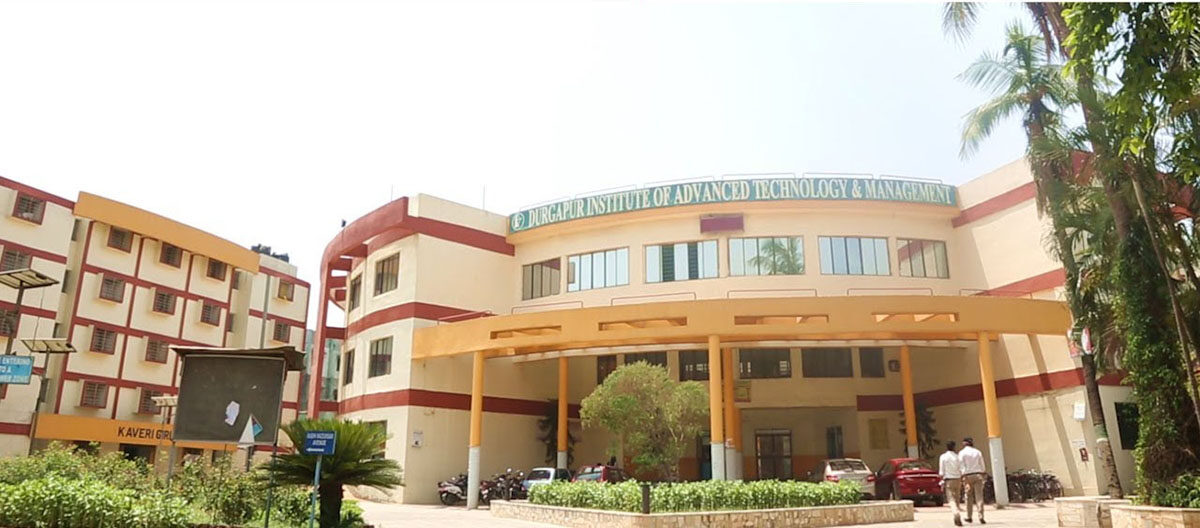
The Seminar is going to held on 29th and 30the September in Hybrid mode at DIATM Campus in association with IEI Durgapur Local Center and partnered with Cureus Journal, Springer Nature. The main theme is as follows:
- Applied Physics and Modern Physics, High Energy & Detector Physics, Applied Chemistry and Green Chemistry, Materials Science, Nanoscience, Mathematical Sciences and Computational Mathematics, Scientific Computing and Numerical Methods, Data Science, Quantum Science and Emerging Technologies, Photonics, Optics, Laser Applications,
- Environmental Science, Sustainable Materials and Circular Economy, Climate Science & Climate Change Modelling, Water Science and Resource Management, Energy Science and Alternative Energy, Science for Sustainable Development, Scientific Instrumentation. Geospatial Science and Remote Sensing, Measurement Techniques, Sensors and Smart Sensing Technologies, Scientific Modelling, Simulation and Optimization, Disaster Science and Risk Assessment,
- Artificial Intelligence and Machine Learning, Internet of Things (IoT) and Smart Systems, Block Chain Technology, Big Data, Cloud Computing, Image Processing, Robotics, Automation and Intelligent Manufacturing, Industry 4.0 and Digital Transformation, Smart Cities and Smart Infrastructure, Renewable Energy, Advanced, Manufacturing and Additive Manufacturing, Electric Vehicles (EV) and Charging Infrastructure, Smart Grid and Micro-grid Technologies, Power System Protection and Fault Analysis, Power Electronics, Battery Energy Storage Systems (BESS), Electric Machine and Drives, Cybersecurity and Information Systems, Communication and Embedded Technologies,
- Innovation and Technology Management, Sustainable Business Practices, Project and Risk Management, Supply Chain and Logistics Management, Operations and Quality Management, Entrepreneurship and Start-up Ecosystems, Research, Development and Technology Commercialization, Intellectual Property Rights (IPR) and Technology Transfer, Circular Economy and Resource Management, Environmental, Social and Governance (ESG), Corporate Sustainability and CSR, Strategic Management for Industry and Society, Public Policy and Governance for Sustainable Development.
- Sustainable Developments, Climate Change Mitigation and Adaptation, Smart and Sustainable Communities, Clean Energy and Environmental Protection, Digital Transformation for Society, Academia–Industry Collaboration, Multidisciplinary Research and Innovation, Engineering Solutions for Global Challenges.
Important Dates:
Please find the Extended deadlines for the submission of Abstract and Registration as below:
| Last date for abstract submission | 15.09.2026 |
| Notification of acceptance | 22.09.2026 |
| Submission of Full paper | 28.09.2026 |
| Last date of Registration | 28.09.2026 |
Authors are requested to submit their abstracts by e- mail to the convener (istm@rahul.ac.in) before the deadline in the prescribed format as mentioned below. The maximum size of the abstract including reference list should not exceed one A4 size paper (preferably within 300 words). Full camera-ready paper should be prepared in line, not exceeding 3000 words in length excluding figures, tables, references and appendices. Accepted Full Papers will be published through the peer reviewed process in CUREUS JOURNAL, a part of SPRINGER NATURE or in Conference Proceedings with ISBN and DOI or in indexed peer reviewed National / International Journals with ISSN.


ISTM-2026 Programme Schedule
Book of Abstracts
Full Paper Submission Guideline:
Full papers are invited from the authors against their accepted abstracts with the following structure:
The paper must contains the sections as mentioned below:
- Introduction
- Materials and Methods
- Results And DiscussionConclusions
- Appendices if any
- References
- Disclosures
- Summary
Title
APA style, Title case, Only one sentence
Do not enter the title in all caps or include a period at the end. Acronyms, initialisms, or abbreviations are not permitted in the article title.
Abstract
3500 Characters limit
Keywords
5 – 10 Keywords. Please keep your keywords short (a maximum of 3-4 words each) and as specific as possible.
Text Formatting
- No paragraph indentations or bulleted lists
- Only one line return after each paragraph
- Only one space between sentences
- Please remove any text styling before copying and pasting your text into the appropriate field
Conclusions
The Conclusion should be concise and should directly reflect the study objectives and principal findings. It must not introduce new data, unsupported claims or information requiring new citations. One or two focused paragraphs will normally be sufficient, but adequacy will be assessed by content rather than sentence or paragraph count.
Numbers
Numbers 1-9 should be spelled out except in cases of measurement (e.g., 7 mm). Numbers higher than nine should be entered numerically (10, 100, 463, 1,932, etc.)
Reference Citations
References should be cited using square brackets. Reference citations may be placed mid-sentence or at the end of a sentence (but before the period). For example: This is an example sentence [1]. If multiple references are cited in one sentence, please list them as follows: [1-4], [1,3], [5,9-12], etc. Footnotes are not permitted.
Please number references in the order in which they are mentioned in the text; they should not be alphabetized. All co-authors must be cited when creating a reference unless there are more than seven authors. If more than seven authors, insert “et al.” after the first three authors. Author names should be formatted as seen in the examples below.
Article within a journal
Watson JEM, Dudley N, Segan DB, Hockings M: The performance and potential of protected areas. Nature. 2014, 515:67-73. 10.1038/nature13947
Ambak R, Tupang L, Hasim MH, et al.: Who do not read and understand food label in Malaysia? Findings from a population study. Health Science Journal. 2018, 12:1-7.
Website
Gentleman R, Ihaka R, Bates D, Chambers J, Dalgaard J: The R project for statistical computing. (2009). http://www.r-project.org/254.
Cureus Journals: Opening doors to boundless knowledge . (2024). Accessed: March 4, 2025. https://www.youtube.com/watch?v=uB3qFM3IOAk
Complete book
Pyrgidis CN: Railway Transportation Systems: Design, Construction and Operation. CRC Press, Boca Raton; 2021. 10.1201/9781003046073
Book chapter or article within a book
Canela MA, Alegre I, Ibarra A: Multiple regression. Quantitative Methods for Management. Springer, Cham; 2019. 37-45. 10.1007/978-3-030-17554-2